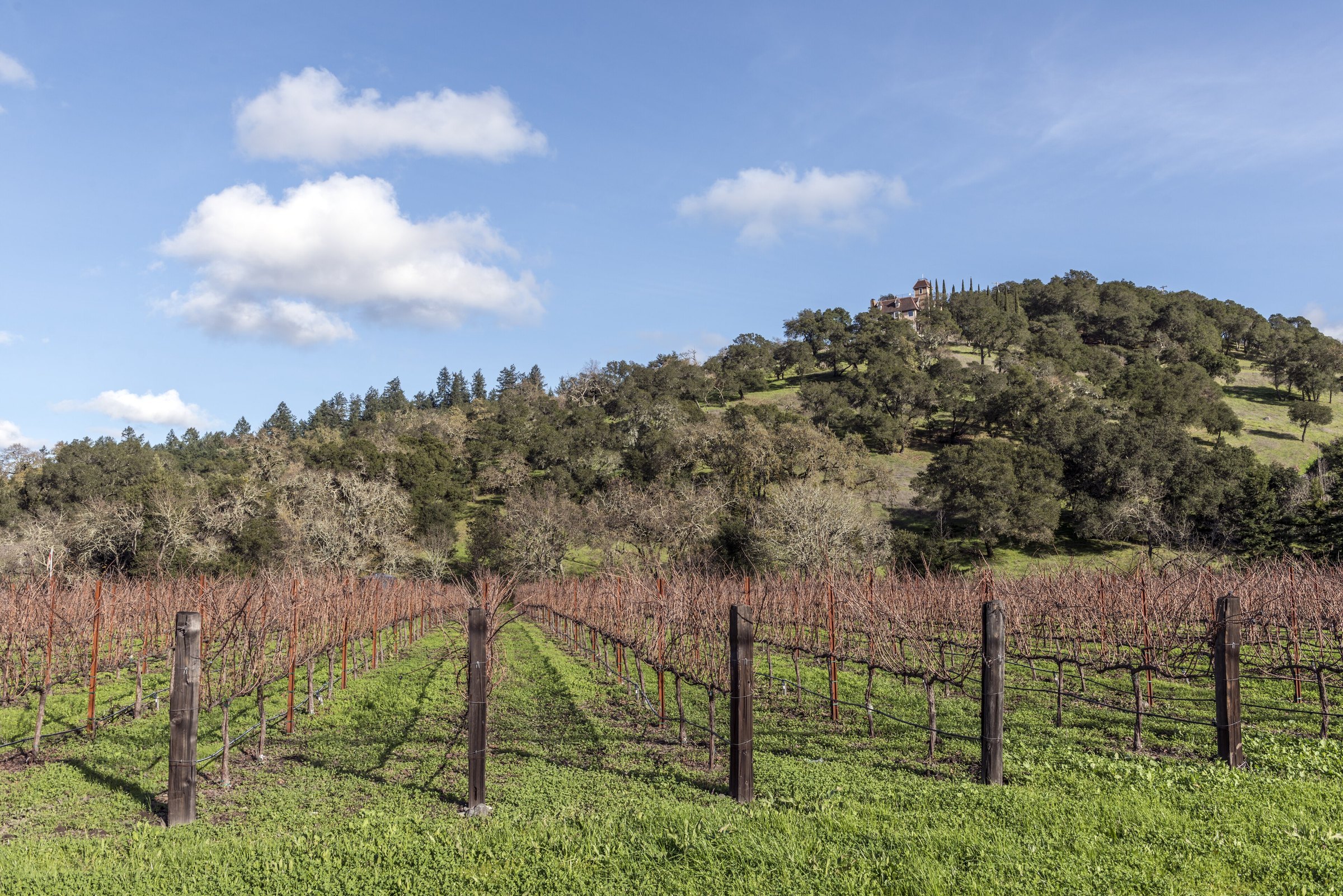
Budbreak arrived nearly two weeks later than the ten-year average this year, and growers on the valley floor spent April watching the thermometer rather than the calendar. A cool, damp spring slows shoot growth, tightens clusters, and — critically for Cabernet Sauvignon — shifts veraison deeper into the season.
That shift matters. When ripening happens under September's softer light rather than August's heat spikes, sugars accumulate more gradually while tannins keep maturing. The result, in vintages that have followed this pattern before, is fruit with lower alcohol potential and a more articulate structure.
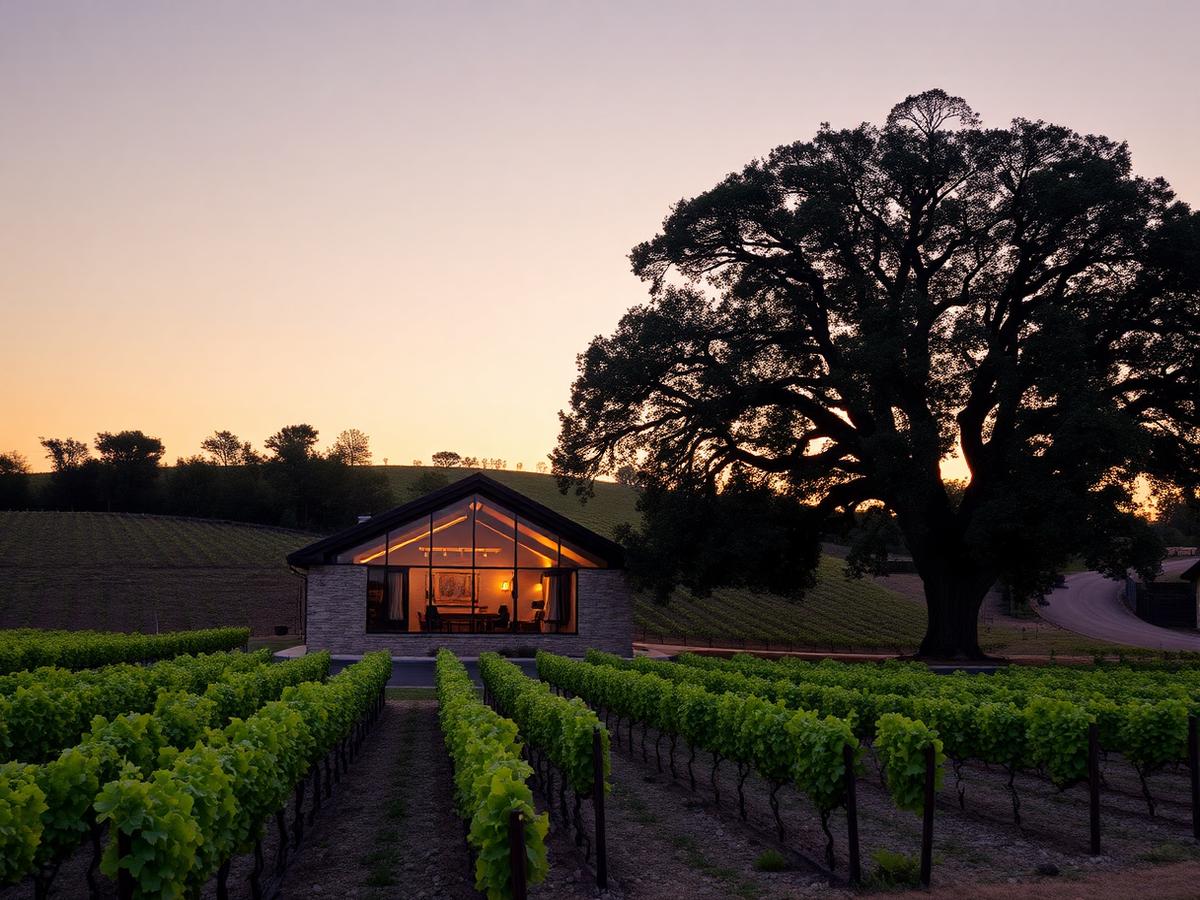
Cabernet clusters ripening on the vine in Napa Valley
“Cool springs rarely make easy harvests. They make interesting wine.”
Smaller berries, denser flavor
Cooler conditions at flowering reduce berry set, which sounds like bad news for yield and is excellent news for concentration. A smaller berry has a higher skin-to-juice ratio, and skins carry color, aroma, and tannin. Winemakers across Oakville and Rutherford are already planning gentler extractions to keep those tannins from overwhelming the fruit.
Hillside sites tell a slightly different story. Above the fog line on Howell Mountain and Spring Mountain, the season has run closer to normal, and those blocks may come in first — an unusual inversion of the typical picking order.
What it means for a visit
For guests traveling this fall, a later harvest is a gift. Crush activity that normally winds down by early October is likely to run deep into the month, which means working cellars, sorting tables in motion, and winemakers who are genuinely on property rather than traveling.
We are holding appointments accordingly — later mornings at the estates that hand-sort, and afternoons reserved for barrel tastings once the day's fruit is in. If your dates are flexible, mid-October will reward you.